Landing Storage Ideas for Making Staircase Zones More Practical
Stair landings are often treated as empty transition spaces, yet some can support useful storage without interfering with safe movement. Landing storage ideas work best when they respect stair circulation first and use leftover wall area for compact cabinets, shelving, benches, or recessed storage.
Identify Space That Isn’t Part of the Walking Route
A landing must remain easy to cross, especially where people turn before continuing up or down the stairs. Storage belongs against genuinely unused edges rather than in the natural footpath.
A quick sketch of the movement pattern can reveal which wall sections are suitable. Browsing home layout references can also help homeowners compare how built-ins relate to nearby doors, railings, windows, and architectural trim.
Consider a Low Cabinet Beneath a Window
A low storage unit can work well on a landing with a window above it. The cabinet may hold books, spare linens, seasonal accessories, or household items that do not need daily access.
Keeping the unit below sill height preserves daylight. Looking at interior styling ideas may help determine whether the top should remain clear, hold a few objects, or become a small display surface without making the landing feel busy.
| Landing Feature | Storage Opportunity | Main Caution |
|---|---|---|
| Blank side wall | Shallow cabinet | Preserve clear passage |
| Window wall | Low built-in | Avoid blocking daylight |
| Deep recess | Shelving | Secure heavy items |
| Wide landing | Storage bench | Keep stair approach open |
Use Recessed Shelving Where Wall Depth Allows
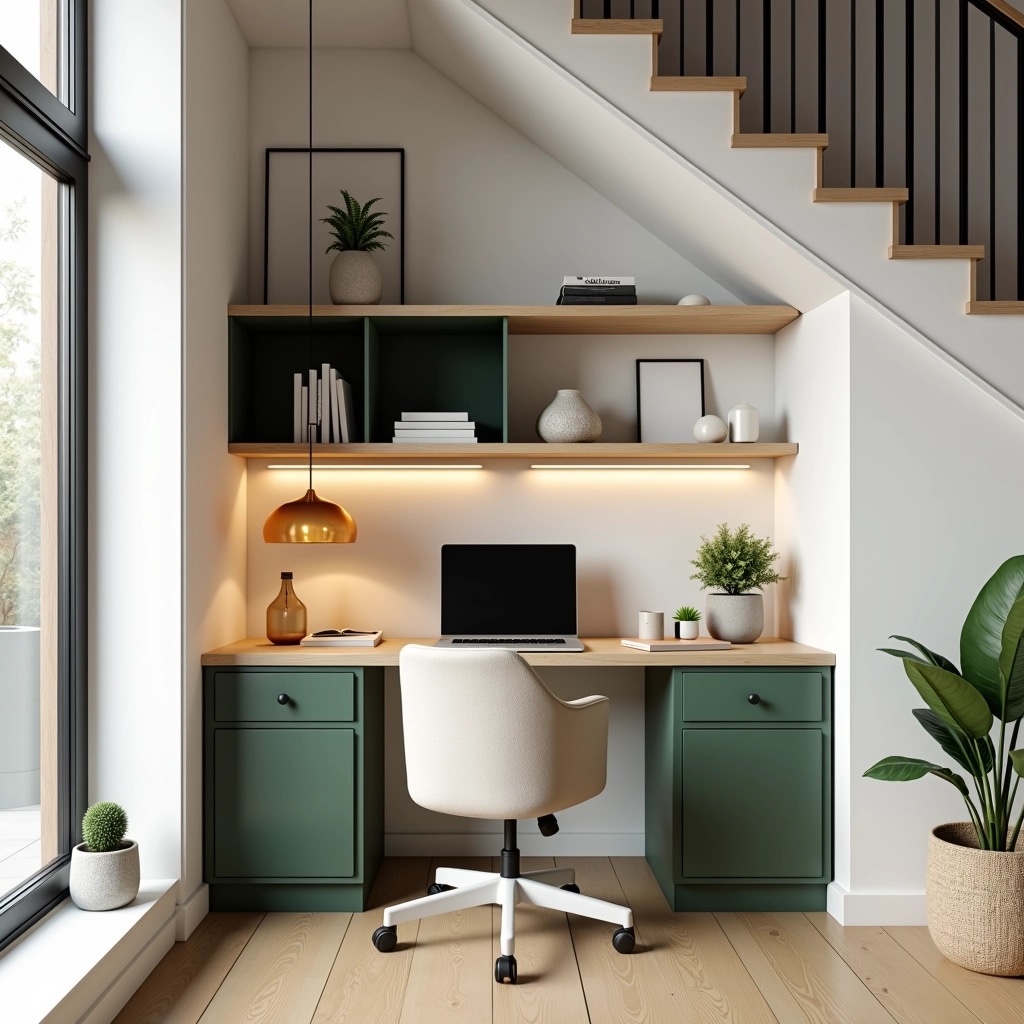
A recessed shelf can add storage without placing furniture into the landing. Even a shallow cavity may accommodate books, baskets, framed objects, or small household supplies.
This approach can feel especially integrated when shelf edges align with existing trim. Broader home planning inspiration can provide ideas for repeating materials between the landing, staircase, and adjoining rooms without making the transition area visually overloaded.
Keep Heavy Objects Lower
Books, filled baskets, and other weighty items are generally more practical on lower shelves. Upper shelves are better suited to lighter, less frequently handled pieces.
Turn a Wide Landing Into a Small Storage Bench
Some staircase layouts create a generous landing that can comfortably hold a compact bench. Adding drawers or lift-up storage beneath the seat turns the space into a useful place for spare blankets, bags, or seasonal items.
A bench should never narrow the route to the next stair flight. Rounded corners, minimal hardware, and a depth proportionate to the landing help prevent the unit from feeling intrusive.
Where Landing Storage Can Go Wrong
The biggest mistake is assuming every empty landing needs furniture. Some are intentionally open because that space is required for comfortable stair use, door clearance, or safe turning.
Loose baskets and projecting shelves can also become hazards near stairs. Storage should remain stable, predictable, and outside the normal walking line. Decorative styling matters less here than keeping the transition uncluttered and easy to understand at a glance.
Frequently Asked Questions
Can a stair landing have built-in storage?
Yes, when enough space remains for safe circulation and access to doors or stairs. Shallow built-ins are usually easier to accommodate than deep cabinets or freestanding furniture.
What should be stored on an upstairs landing?
Spare linens, books, seasonal accessories, extra toiletries, and other household items can work well. Frequently used objects should remain easy to reach without creating clutter beside the stairs.
Is open shelving suitable beside a staircase?
It can be, particularly when the shelves are recessed or positioned away from the walking path. Avoid placing fragile or heavy objects where they could fall toward the stairs.
Use Only the Space the Landing Can Spare
A staircase landing can become more useful without losing the openness that makes it comfortable. Identify truly unused wall space first, then consider recessed shelves, shallow cabinets, or a low bench that stays outside the walking route. The goal isn’t to fill an empty area. It’s to capture storage capacity while keeping every trip up and down the stairs uncomplicated.