Propagation Station Ideas for Cuttings, Jars, and Small Plants
Plant propagation can begin with a single glass on a windowsill and somehow turn into twelve jars, several trays, scissors, labels, and young plants competing for space. A dedicated propagation station brings that small-scale chaos under control.
The best setup keeps cuttings visible, stable, easy to inspect, and close to the basic supplies needed for regular care.
Decide Whether the Station Is Decorative or Work-Focused
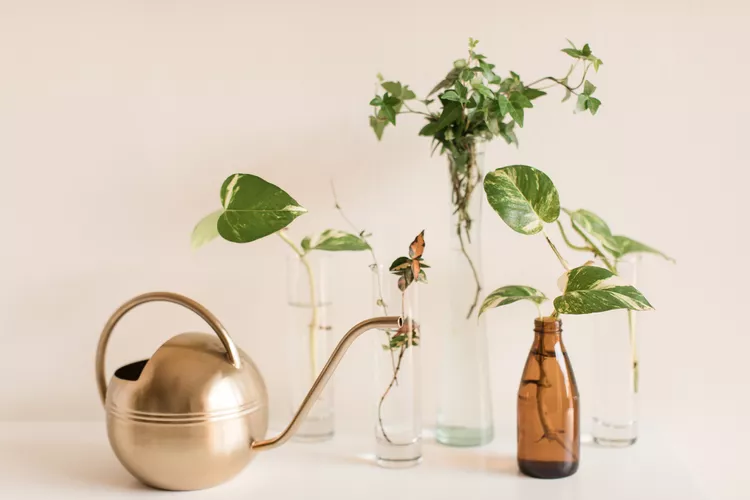
A propagation station in a living room may need to look attractive even when several cuttings are at different stages. Matching jars, a narrow shelf, and limited supplies can keep the display calm.
A utility-room station can prioritize function instead. Open containers, trays, and practical shelving may suit homeowners who prefer the clean organizational thinking seen across broader interior planning ideas.
Give Every Container a Stable Base
Narrow jars tip easily, especially once leaves make a cutting top-heavy. A tray with a raised edge can keep several vessels grouped while reducing the chance of one being knocked onto the floor.
Avoid packing containers shoulder to shoulder. You need enough room to remove one jar without disturbing the rest.
Keep Cutting Tools Within Reach
Clean scissors, pruning snips, labels, and a marker are the supplies most often needed during propagation. A shallow drawer or small caddy is usually enough.
Keeping tools directly beside the propagation area reduces unnecessary trips through the house. That sense of a defined working zone is similar to the purposeful organization found in well-arranged garden and porch settings.
| Propagation Item | Useful Placement | Reason |
|---|---|---|
| Water jars | Stable tray | Controls spills |
| Snips | Shallow drawer | Easy access |
| Labels | Small container | Prevents mix-ups |
| Young plants | Lower shelf | Frees work surface |
Plan for Plants That Outgrow the Jar Stage
A propagation station shouldn’t only accommodate fresh cuttings. Rooted plants eventually need pots, growing medium, saucers, and more physical room.
Reserve a lower shelf or nearby bin for small containers and basic potting supplies. This staged approach mirrors larger space organization principles where areas are planned around changing needs rather than one fixed use.
Use Light Without Overcrowding the Window
A bright window may appear to be the obvious place for every cutting, but squeezing dozens of jars onto one sill can create instability and make maintenance awkward.
Wall shelves or a slim plant stand can spread the collection vertically. The exact light requirement varies by plant, so arrange individual cuttings according to their needs instead of assuming one location suits everything.
Where Propagation Displays Can Fail
Looks can take over the project. An attractive line of identical jars isn’t useful if vessels are difficult to remove, water spills behind furniture, or roots become impossible to inspect.
Another mistake is allowing successful cuttings to remain indefinitely because no next-stage area exists. Plan from cutting to rooted plant to pot instead of treating propagation as a permanent holding pattern.
Frequently Asked Questions
Can different plant cuttings share one propagation jar?
Sometimes, but separate containers make individual root development easier to monitor and reduce tangling when cuttings are eventually removed.
How should propagation jars be labeled?
A small waterproof label can record the plant name and cutting date without covering much of the glass.
Do propagation stations need special shelving?
No. A stable shelf, cart, narrow console, or protected windowsill can work if it safely supports water-filled containers and gives plants suitable conditions.
Plan Beyond the First Roots
A useful propagation station makes each stage easy to manage. Fresh cuttings have stable jars, tools stay nearby, and rooted plants have somewhere to go next.
Keep the setup modest enough to maintain consistently. A small organized collection is easier to monitor than a large display where plants, labels, and containers constantly compete for room.