Reachable Window Hardware Ideas for Easier Opening and Closing
A window isn’t truly convenient if opening it requires stretching behind furniture, twisting a stiff latch, or reaching above shoulder height. Reachable window hardware ideas focus on placement, operating force, approach space, and hardware shape so everyday ventilation can remain practical for a wider range of users.
Start With the Operating Position
Window accessibility depends on where the user stands or sits while operating it. A latch may appear reasonably low until a deep sill, countertop, sofa, or cabinet increases the actual reach distance.
Look at the entire approach rather than hardware height alone. Clear floor space and an unobstructed path often make as much difference as the window mechanism itself.
Choose Hardware That Is Easy to Grip
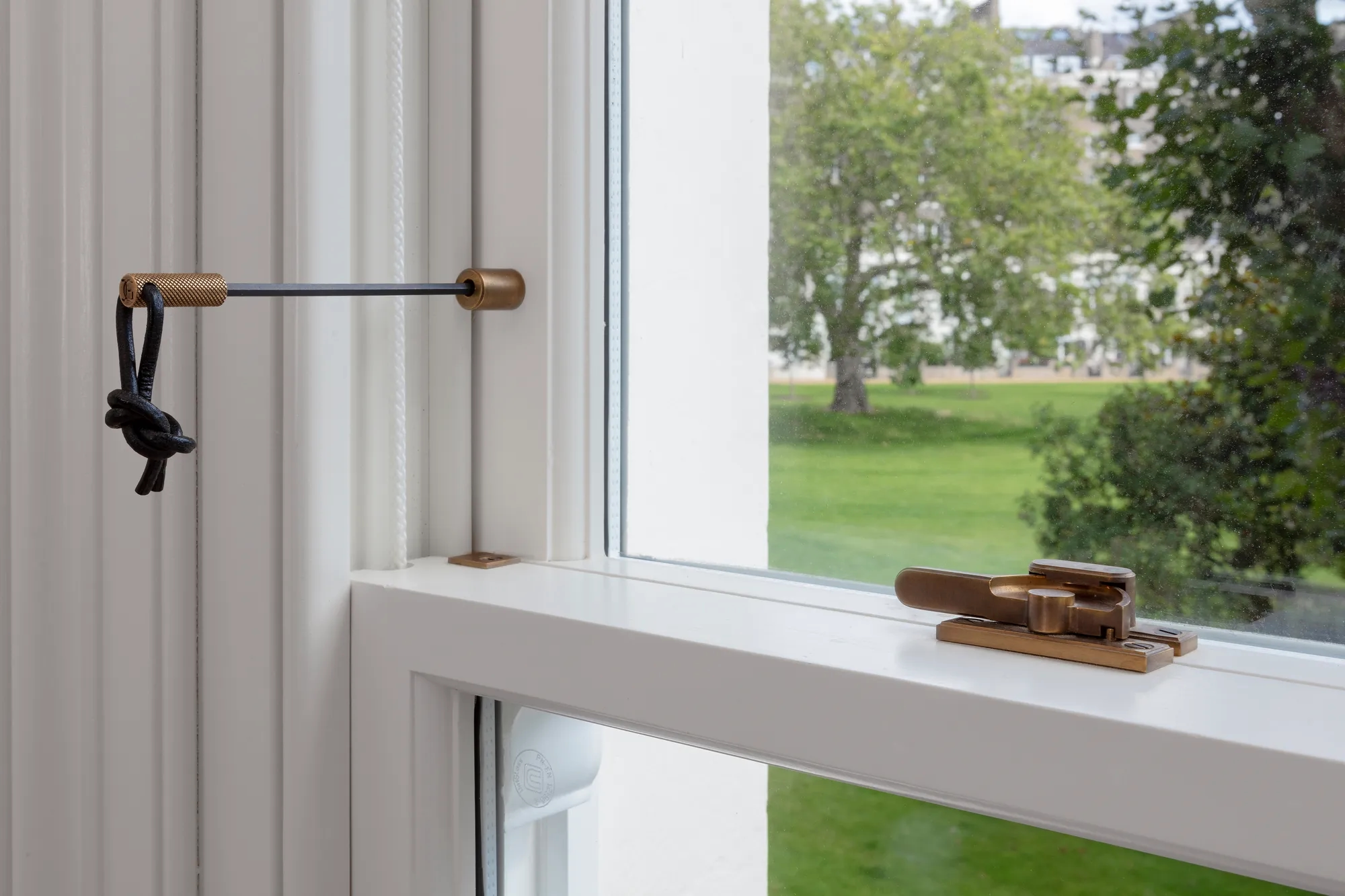
Small finger latches can be difficult for people with limited hand strength or dexterity. Larger handles, simple levers, and hardware that does not require a tight pinch are often easier to operate.
Someone browsing general home planning references may focus first on window size and placement. Daily usability, however, often comes down to the small hardware touched every time fresh air is wanted.
Test the Full Motion
Opening is only half the task. The user should also be able to close and secure the window without excessive pulling, reaching, or wrist rotation.
A mechanism that feels comfortable in a showroom may behave differently once installed at full height.
Keep Furniture From Blocking Access
Window placement and furniture planning should be considered together. Deep sofas, desks, beds, or storage units placed directly beneath an operable window can turn an easy reach into an awkward stretch.
Broader property design material can inspire room layouts, but an attractive arrangement shouldn’t sacrifice access to frequently used hardware. Leaving a clear side approach may work better than centering large furniture directly below the opening.
| Hardware Issue | Possible Difficulty | Better Direction |
|---|---|---|
| Tiny latch | Requires finger strength | Use larger grip surfaces |
| High handle | Requires overhead reach | Choose reachable placement |
| Stiff mechanism | Needs strong force | Maintain or replace hardware |
| Blocked approach | Forces leaning | Rearrange nearby furniture |
Curtains and blinds should not create another barrier. Long cords, heavy layered treatments, or bulky valances can make the operating area harder to reach.
Match the Window Style to the User
Different window styles require different motions. Some slide horizontally, some lift vertically, and others use cranks or handles.
People reviewing residential design ideas may find it useful to judge windows by operation rather than appearance alone. A crank mechanism, for example, may reduce the need to push a heavy sash directly, though the handle still needs to be positioned where it can be comfortably reached.
Maintenance affects operation as well. Dirt, worn tracks, loose components, or old paint can make otherwise suitable hardware much harder to move.
What Window Planning Often Gets Wrong
A common mistake is selecting hardware before considering finished furniture and interior treatments. A handle can technically meet a planned reach zone yet become difficult once a countertop or deep cabinet is installed below it.
Another problem is assuming motorized operation automatically solves accessibility. Powered systems may help, but they introduce controls, electrical components, maintenance, and possible failure points.
Manual backup access can still be valuable. The simplest option that a household can operate comfortably is often more practical than adding complexity without a clear need.
Frequently Asked Questions
Can existing window handles be replaced with easier hardware?
Sometimes. Compatibility depends on the window design and locking mechanism, so replacement hardware should match the existing system rather than interfering with secure closure.
How can furniture affect window accessibility?
Furniture can increase horizontal reach distance or remove the clear floor area needed to approach the window. Even a low piece can make a handle harder to reach comfortably.
Does easier window hardware help people with arthritis or weak grip?
Hardware that reduces pinching, twisting, and operating force may be easier for many users with limited hand strength. The exact benefit depends on the person’s abilities and the window mechanism.
Test Windows From the Real Approach
Choose window hardware based on how it will actually be reached, gripped, moved, and locked after the room is furnished. Check the full operating motion, keep access paths clear, and maintain moving parts so resistance stays manageable. Small hardware choices can determine whether a window remains useful every day.