Outlet Placement Ideas for Furniture Layouts and Everyday Charging
Good outlet placement is mostly about anticipating where people will sit, work, charge devices, use lamps, and position furniture. A room can technically have several receptacles yet still feel inconvenient if every cord has to stretch behind a sofa or across a walkway. Better outlet placement ideas begin with the furniture plan.
Plan From Furniture, Not Empty Walls
An empty room makes every wall look equally useful. Once a bed, sectional, desk, media console, or bookcase arrives, many outlets may become hidden.
Start with the expected furniture footprint and then compare it with wall design planning. This can reveal where outlets would be covered by large pieces and where additional access may be more useful.
Pay Attention to Both Sides of Large Furniture
Sofas and beds often create charging problems because one receptacle may serve only one side comfortably. A layout that anticipates lamps, chargers, and small electronics can reduce long cords running behind furniture.
Fixed furniture deserves particular attention because its position is less likely to change.
Build Charging Into Everyday Zones
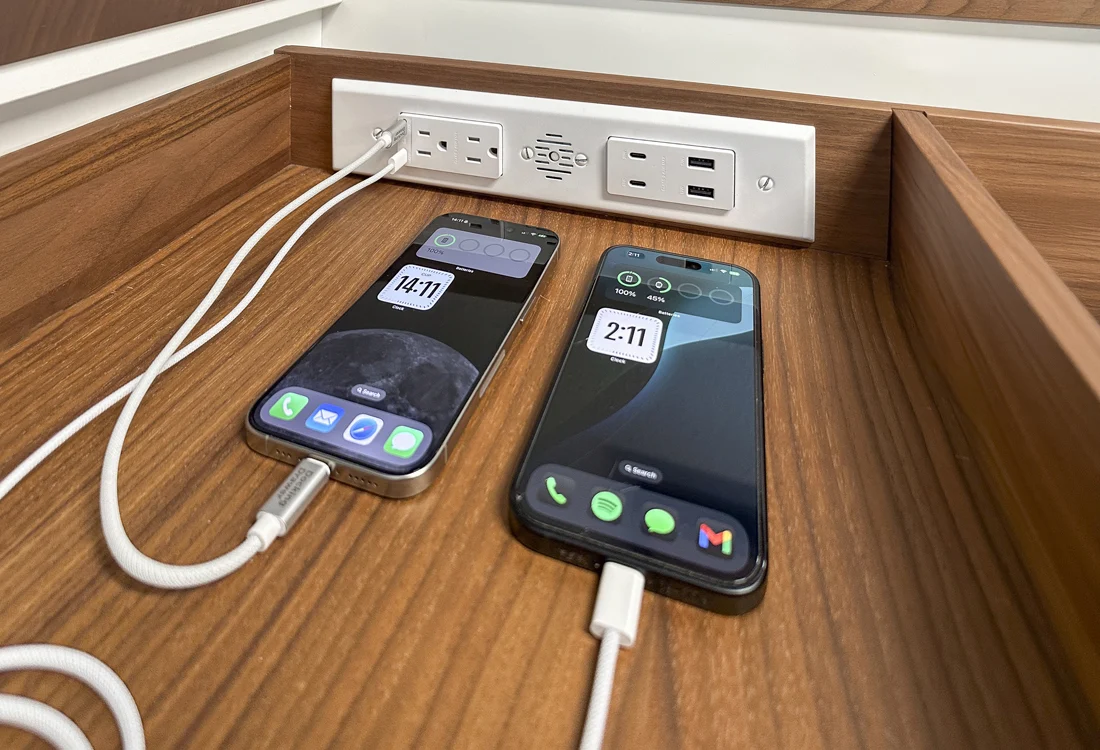
Charging usually happens where people spend time: beside beds, near sofas, at desks, around kitchen counters, and close to entry areas.
Studying practical furniture layouts can help identify these habits before outlet positions are finalized. A receptacle near the wrong end of a desk or behind a solid cabinet may technically exist but provide little everyday value.
| Area | Typical Electrical Use | Planning Idea |
|---|---|---|
| Bedside | Lamps and charging | Access on both sides |
| Sofa zone | Lamps and devices | Avoid long cords |
| Desk | Computer equipment | Keep plugs reachable |
| Entry area | Small electronics | Plan a charging point |
Keep Outlets Accessible After Decorating
Decor choices can unintentionally make useful receptacles difficult to reach. Deep cabinets, oversized nightstands, wall panels, and tightly fitted furniture can cover them almost completely.
Ideas from comfortable home layouts point toward a practical compromise: place power where the room naturally needs it without turning every visible wall into a line of electrical devices.
Floor planning matters as much as wall planning. Think about the route a cord would actually take from a device to the outlet.
Account for Rooms With Several Layout Options
Living rooms and multipurpose spaces are often rearranged. Designing every outlet around one exact sofa position can make a future layout inconvenient.
Where practical, spread usable receptacles around the room so one furniture arrangement doesn’t become permanent simply because of power access. Home offices need similar flexibility when desks may move between walls.
Final spacing and placement still need to comply with applicable electrical requirements.
Where Outlet Planning Often Fails
The most common mistake is focusing only on outlet quantity. Ten poorly positioned receptacles can be less convenient than a smaller number placed around actual furniture and device habits.
Another mistake is relying on power strips and extension cords as the permanent answer to poor placement. They can be useful accessories, but repeated cord routing across furniture or walking areas usually signals that the room’s electrical plan deserves another look. High-load equipment should also be evaluated separately rather than treated like everyday charging devices.
Frequently Asked Questions
Should outlets be placed behind a bed?
They can be useful there, but placement should account for the bed frame, headboard, nightstands, plugs, and cord access. The goal is to avoid trapping plugs where they are difficult to reach.
Where are outlets most useful in a home office?
Useful locations often include areas near the desk, computer equipment, printer, monitor setup, and charging points. Exact placement depends on the planned desk orientation and applicable electrical rules.
Is it worth planning outlets before buying furniture?
Yes. Even a rough furniture plan can reveal where receptacles may become blocked and where lamps, chargers, televisions, or office equipment will need convenient power.
Design Power Around Daily Habits
Outlet planning improves when it starts with real behavior rather than blank-wall symmetry. Sketch the bed, sofa, desk, television, tables, and likely charging zones before electrical locations are finalized. Then adjust the layout so power stays reachable without unnecessary cords. Electrical installation and required receptacle placement should still follow applicable codes and professional guidance.