
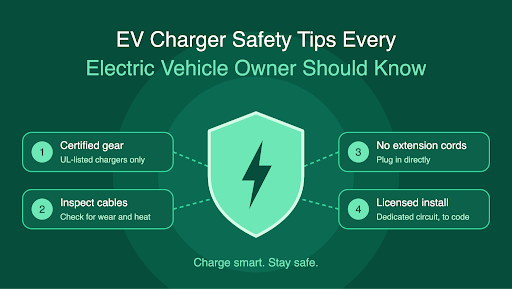
EV Charger Safety Tips Every Electric Vehicle Owner Should Know
Home EV charging is generally designed to be safe when the charger, electrical circuit, and installation are appropriate for the vehicle and property. The most important EV charger safety steps are using properly rated equipment, having the electrical circuit installed correctly, avoiding damaged cables and unsuitable extension cords, keeping connections dry, and addressing repeated breaker trips or other electrical warning signs promptly.
An EV charger can operate for several hours while delivering a substantial amount of electricity, so treating the equipment as a major electrical appliance is important. Good charging habits and proper installation can help homeowners avoid preventable electrical problems.
1. Use a Charger Designed for Your Vehicle
Not every EV charger is compatible with every electric vehicle.
Before purchasing equipment, check the vehicle manufacturer’s recommendations and confirm that the charger’s connector and electrical specifications are suitable for your vehicle.
You should also consider the maximum charging rate supported by the vehicle. Buying a charger with a higher power rating does not necessarily mean the vehicle will charge faster if the vehicle cannot accept that level of power.
Using compatible equipment is the first step toward a reliable charging setup.
2. Have the Electrical Circuit Properly Evaluated
A home EV charger can place a significant load on the electrical system, particularly when using a Level 2 charger.
Before installation, the electrical panel, service capacity, wiring, and existing household loads should be considered. An older home may have limited capacity, while newer properties may already have sufficient electrical infrastructure.
Homeowners should not assume that an unused breaker position automatically means the panel can support an EV charger.
A professional electrical evaluation can identify whether a dedicated circuit is appropriate and whether any upgrades are necessary.
3. Use a Dedicated Circuit When Required
Many Level 2 charging installations require a dedicated electrical circuit.
Sharing a circuit with other high-powered appliances can create excessive electrical demand and may cause breakers to trip or wiring to become overloaded.
The exact circuit requirements depend on the charger and installation specifications. Follow the manufacturer’s requirements and applicable electrical codes rather than trying to determine the setup based solely on the outlet’s appearance.
A properly designed circuit provides the electrical capacity the charger needs during extended charging sessions.
4. Never Ignore a Frequently Tripping Breaker
A circuit breaker is designed to interrupt power when it detects an electrical condition that requires attention.
If the breaker supplying your EV charger repeatedly trips, do not simply reset it over and over again.
Repeated trips can indicate an overloaded circuit, an electrical fault, a problem with the equipment, or another issue that needs investigation.
Stop using the charger and have the electrical system and charging equipment inspected if the problem continues.
5. Avoid Using Unsuitable Extension Cords
One common mistake is using an extension cord to reach a vehicle parked farther away from the charging outlet.
EV charging can continue for several hours and place a sustained load on the electrical connection. An extension cord that is not appropriately rated for the equipment can create unnecessary risks.
A permanent charging location should generally use a properly designed electrical connection rather than relying on an improvised extension-cord arrangement.
If the existing outlet is too far from the vehicle, consider having a qualified electrician evaluate whether a new charging location or circuit would be more appropriate.
6. Keep Charging Connections Dry
Electricity and water are a dangerous combination, so charging equipment should be used according to its environmental rating and manufacturer’s instructions.
If a charger is installed outdoors, the equipment should be specifically designed for outdoor use and installed appropriately.
Keep connectors and electrical connections away from standing water, flooding, and other avoidable sources of moisture.
Do not handle electrical connections with wet hands, and follow the manufacturer’s instructions regarding outdoor charging during severe weather.
7. Inspect the Charging Cable Regularly
The charging cable is handled frequently, so it can experience wear over time.
Before charging, look for visible cuts, cracks, exposed wires, melted sections, damaged connectors, or other signs of deterioration.
Do not continue using equipment that appears damaged. Contact the manufacturer or a qualified professional to determine whether the cable or charger needs to be repaired or replaced.
Taking a few seconds to inspect the equipment can help identify problems before they become more serious.
8. Keep the Charging Area Clear
The area around the charger should remain reasonably clear and accessible.
Avoid placing heavy objects on the charging cable or routing it through areas where it can be crushed, pinched, or repeatedly driven over.
If the cable crosses a walking path, it can also create a tripping hazard. Whenever possible, position the charger and cable so that the vehicle can connect without creating an obstacle for people moving through the garage or driveway.
Good cable management improves both convenience and safety.
9. Choose the Installation Location Carefully
Where the charger is installed can affect how safely and conveniently it is used.
A garage installation may protect the equipment from direct weather exposure, while an outdoor installation requires equipment suitable for the environment.
The charger should be positioned where the cable can comfortably reach the vehicle without excessive tension. It should also be mounted according to the manufacturer’s requirements.
Homeowners should consider the vehicle’s parking position, charging-port location, garage doors, walkways, and other nearby objects before selecting the final location.
10. Keep Flammable Materials Away From Electrical Equipment
Garages often contain gasoline-powered equipment, paints, solvents, cleaning products, cardboard, and other stored materials.
While EV charging equipment is designed for normal operation, maintaining a clean and organized charging area is a sensible precaution.
Avoid placing combustible materials directly around electrical equipment, and make sure the charger has the clearance recommended by its manufacturer.
Keeping the garage organized also makes it easier to inspect the equipment and notice any unusual conditions.
11. Follow the Manufacturer’s Instructions
Every charger can have its own operating requirements.
Read the installation and operating instructions before using the equipment. Pay attention to information about installation, temperature limits, cable storage, cleaning, error messages, and maintenance.
Do not modify the charger or its electrical connections unless the manufacturer specifically permits it and the work is performed appropriately.
If something about the charger’s operation seems unusual, consult the manufacturer or a qualified electrical professional instead of guessing at the cause.
12. Be Careful With Outdoor Charging
Outdoor EV charging can be convenient, particularly for homes without a garage.
However, outdoor installations require equipment that is rated for the environment and appropriate installation of the electrical components.
Consider exposure to rain, snow, ice, sunlight, temperature changes, and physical damage. The charging station should be installed in a location where it is protected as much as practical while remaining convenient to use.
If you are unsure whether your existing equipment is suitable for outdoor use, check the manufacturer’s specifications or ask a qualified professional.
13. Have Older Electrical Systems Inspected
Older homes deserve particular attention before adding a significant electrical load.
An outdated electrical panel, deteriorated wiring, inadequate grounding, or limited service capacity can affect the suitability of a new EV charging circuit.
This does not mean every older home requires a complete electrical upgrade. The appropriate approach depends on the property’s actual condition and electrical requirements.
A professional assessment can identify specific issues and help determine what work, if any, is necessary.
14. Know When to Call an Electrician
Some EV charging problems should not be treated as DIY projects.
If you notice burning smells, unusual heat, damaged wiring, repeated breaker trips, sparks, visible damage, or persistent charging errors associated with the electrical supply, stop using the equipment and seek professional assistance.
A qualified electrician can inspect the circuit, connections, panel, and charging equipment to identify the source of the problem.
Homeowners looking for professional electrical assistance can contact Edison Electric Inc for help evaluating their electrical system and charging setup.
15. Plan Professional Installation From the Start
One of the easiest ways to avoid charging-related electrical problems is to have the installation planned correctly from the beginning.
A professional know more assessment can help determine the appropriate charger location, circuit requirements, wiring, and electrical capacity before equipment is installed.
This is especially important for Level 2 chargers because they can operate at relatively high power for extended periods.
Professional planning can also help homeowners avoid choosing equipment that is incompatible with their electrical system or daily charging needs.
Safe home EV charging starts with the electrical system, but everyday habits matter too. Use compatible equipment, follow manufacturer instructions, keep cables in good condition, avoid unsuitable extension cords, protect connections from moisture, and never ignore repeated electrical problems.
Most importantly, an EV charger should be treated as a significant electrical load rather than simply another device that can be plugged in anywhere.
If you are installing a new charger, having the electrical system evaluated beforehand can help identify potential issues and ensure the equipment is properly matched to the home. With appropriate equipment, professional installation, and sensible charging habits, homeowners can make EV charging a safe and convenient part of everyday life.