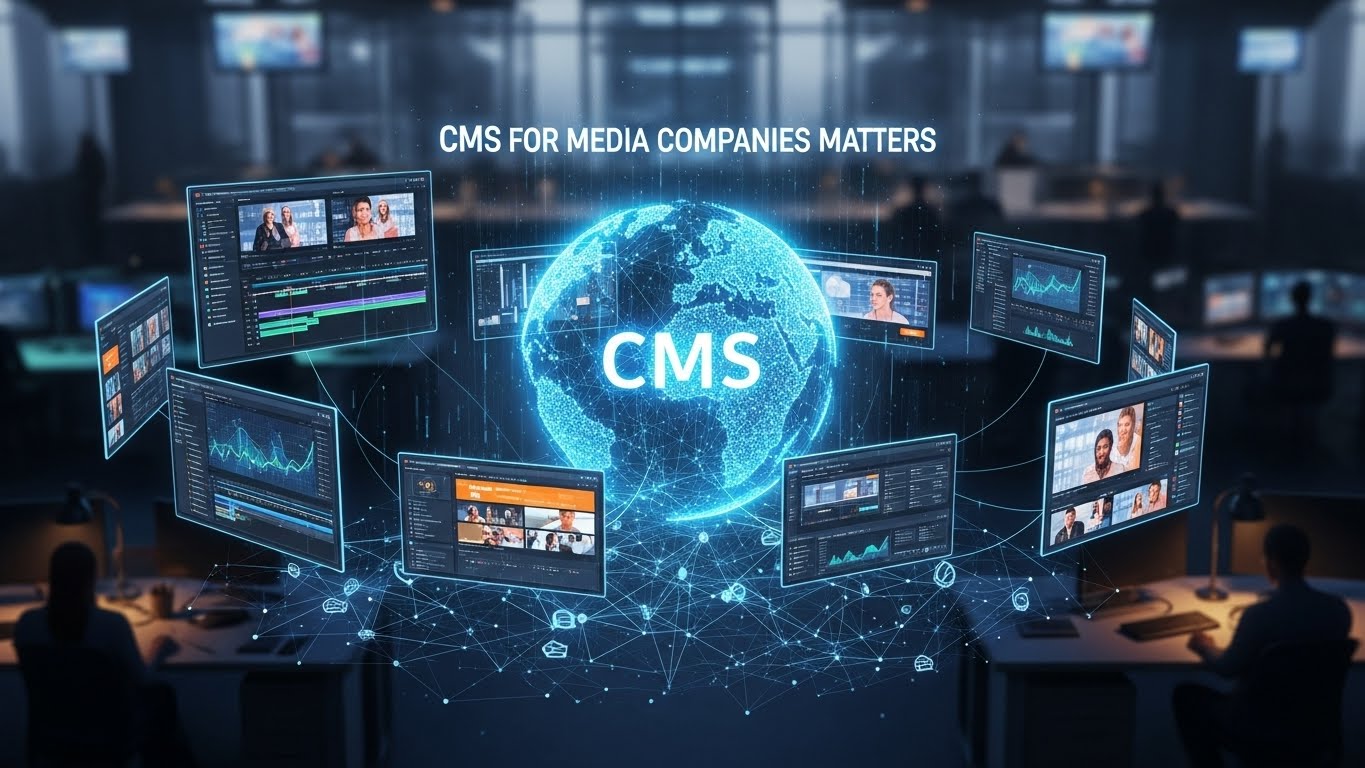
The Role of a CMS for Media Companies in Digital Transformation
In the fast-paced world of media, teamwork is essential. Journalists, editors, designers, marketers, and developers all need to coordinate effectively to produce high-quality content under tight deadlines. A Content Management System (CMS) serves as the backbone of this collaboration, providing centralized tools and workflows that streamline communication, task management, and content creation. Understanding how CMS platforms enhance collaboration can help media companies boost productivity and maintain a competitive edge.
Centralized Content Management
A CMS provides a single platform where all content—articles, images, videos, and multimedia assets—is stored, managed, and accessed by authorized team members. Centralization ensures that:
- Teams are always working with the most current content
- Version control prevents conflicts between drafts
- Duplicate content and redundant work are minimized
By having a unified repository, teams can collaborate more effectively, regardless of physical location or time zone.
Role-Based Permissions and Access Control
Modern CMS for media companies platforms allow administrators to assign role-based permissions to team members. Each user can have defined access based on their responsibilities, such as:
- Writers: Can draft and edit articles
- Editors: Can review, approve, and schedule content
- Designers/Developers: Can access assets and implement layouts or interactive features
- Marketing Teams: Can publish content and track analytics
These permission structures prevent accidental content changes while enabling clear accountability, ensuring smooth collaboration across departments.
Workflow Management
A CMS allows media companies to define custom workflows that match their editorial processes. Features like content approval pipelines, task assignments, and notifications enable teams to work together efficiently.
Benefits include:
- Automated content approvals reduce bottlenecks
- Clear task assignments ensure accountability
- Timely notifications keep team members aware of deadlines and updates
Workflow management ensures that even complex projects involving multiple contributors progress smoothly from draft to publication.
Real-Time Collaboration
Many modern CMS platforms support real-time editing, commenting, and asset sharing. This capability allows multiple team members to work on the same document simultaneously, providing immediate feedback and reducing delays caused by email chains or offline revisions.
Advantages include:
- Faster review and editing cycles
- Immediate resolution of questions or issues
- Enhanced teamwork for distributed or remote teams
Real-time collaboration makes it easier for media teams to produce content quickly without compromising quality.
Multi-Channel Collaboration
Media companies today publish content across websites, mobile apps, social media, and email newsletters. A CMS enables teams to manage multi-channel campaigns collaboratively:
- Marketing, editorial, and design teams can coordinate content tailored for each platform
- Teams can schedule cross-channel campaigns from a single interface
- Performance tracking is centralized, allowing teams to adapt strategies quickly
Multi-channel collaboration ensures consistent messaging and branding while reducing duplication of effort.
Integration with Third-Party Tools
Many CMS platforms integrate with other tools used by media teams, including:
- Digital Asset Management (DAM) systems
- Analytics and audience insights platforms
- Social media management tools
- Marketing automation and CRM systems
These integrations allow teams to access all necessary resources within the CMS, enhancing collaboration by reducing the need to switch between multiple platforms.
Case Studies: Improved Team Efficiency
Media organizations using modern CMS platforms often see measurable improvements in collaboration:
- Faster editorial cycles and reduced time-to-publish
- Enhanced coordination between remote or distributed teams
- Improved content quality through collaborative review and feedback processes
- Streamlined multi-channel content distribution
These results highlight the CMS’s role in transforming media production into a seamless, collaborative process.
Benefits Beyond Collaboration
In addition to improving teamwork, CMS platforms provide other advantages:
- Enhanced transparency: Everyone knows who is responsible for each task
- Data-driven decision making: Integrated analytics inform content strategy
- Scalability: As teams and content volumes grow, CMS platforms support expansion without disruption
Collaboration features thus contribute to overall operational efficiency and long-term growth for media organizations.
Conclusion
CMS platforms are essential for improving collaboration in media companies. By centralizing content, enabling role-based permissions, supporting real-time editing, managing workflows, facilitating multi-channel publishing, and integrating with other tools, CMS platforms ensure that teams work together efficiently and effectively.
For media organizations aiming to produce high-quality content at scale, investing in a robust CMS is not just about content management—it is a strategic step toward fostering seamless collaboration, enhancing productivity, and maintaining a competitive advantage in the digital media landscape.